by Dorothee Schröder
An East End District
Spitalfields lies in London’s East End within the London Borough of Tower Hamlets.
The Origin of the Name
The district probably takes its name from St Mary Spital, a medieval priory and hospital that provided lodging for travellers and the poor.
The Huguenots and the Silk Industry
Spitalfields became closely associated with the silk trade after Huguenot refugees from France settled in the area during the seventeenth century. Many of them were silk weavers, and some of the historic houses connected to this period still survive today.
Christ Church
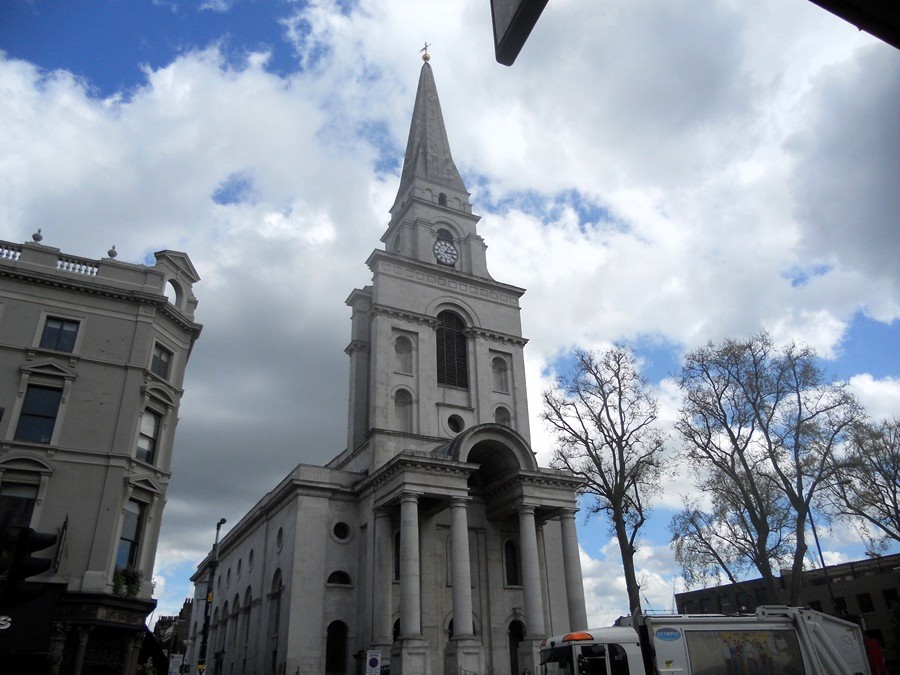
As the Huguenots established numerous chapels in the area, Anne, Queen of Great Britain commissioned Nicholas Hawksmoor to design the impressive Christ Church Spitalfields on Fournier Street, reflecting the influence of the established Church.
Spitalfields Market
In 1638, Charles I of England granted a licence for the sale of “flesh, fowl and roots” at Spitalfields Market, then known as Spittle Fields. Today, Old Spitalfields Market is a popular destination for crafts, fashion and street food.
Poverty and Crime in Victorian London
During the Victorian era, Spitalfields fell into severe decline and became associated with poverty, disease and crime. Streets such as Flower and Dean Street and Dorset Street gained reputations as some of the most dangerous in London.
Jack the Ripper
Spitalfields gained lasting notoriety through the murders committed by Jack the Ripper in the Autumn of Terror 1888.
Brick Lane and the Bangladeshi Community
In the twentieth century, Spitalfields became home to a large Bangladeshi community, helping to establish Brick Lane as London’s famous “curry capital”.
Petticoat Lane Market
Petticoat Lane Market today consists mainly of Wentworth Street Market, open six days a week, and Middlesex Street Market, which takes place on Sundays.
Dennis Severs’ House
Dennis Severs’ House in Folgate Street recreates the atmosphere of a Huguenot silk-weaving household, with rooms arranged as though the family had only just stepped outside.
Cover picture: Christ Church (photo by Philipp Röttgers)