by Dorothee Schröder
Although Jacob’s Island no longer exists as a distinct place, this notorious corner of London is still worth a closer look.
A Notorious Slum
Located on the south bank of the Thames, Jacob’s Island was an infamous slum in Bermondsey during the nineteenth century.
The Origin of the Name
The name probably derived from a colloquial term for frogs, referring to the marshy surroundings of the area.
An “Island” in the Marshes
Bordered by tidal ditches to the east and south and by the meeting of the Thames and the subterranean river Neckinger, the district took on the character of an island.
Dickens’s Dramatic Setting
Charles Dickens chose the island as the setting for the death of the villain Bill Sikes, who meets his end in the mud of Folly Ditch in Oliver Twist.
Dickens’s Investigation
According to an often-told story, a policeman initially denied the existence of Jacob’s Island when Dickens asked him about the area.
A “Pest Island”
In a letter to the Morning Chronicle in 1849, social researcher Henry Mayhew described Jacob’s Island as a “pest island” with “the smell of a graveyard”.
First Attempts at Redevelopment
During the 1850s the authorities reluctantly began to improve conditions by filling in the ditches and draining the area.
Fire and Industrial Change
After a major fire in 1861 destroyed parts of the neighbourhood, redevelopment began and warehouses gradually replaced the slum dwellings.
Damage During the Blitz
Because of its industrial sites, the area suffered heavy damage during The Blitz.
From Slum to Luxury Living
Once one of London’s most notorious slums, Jacob’s Island has been transformed into an area of luxury riverside apartments in today’s London Borough of Southwark, with only one Victorian warehouse surviving from its industrial era.
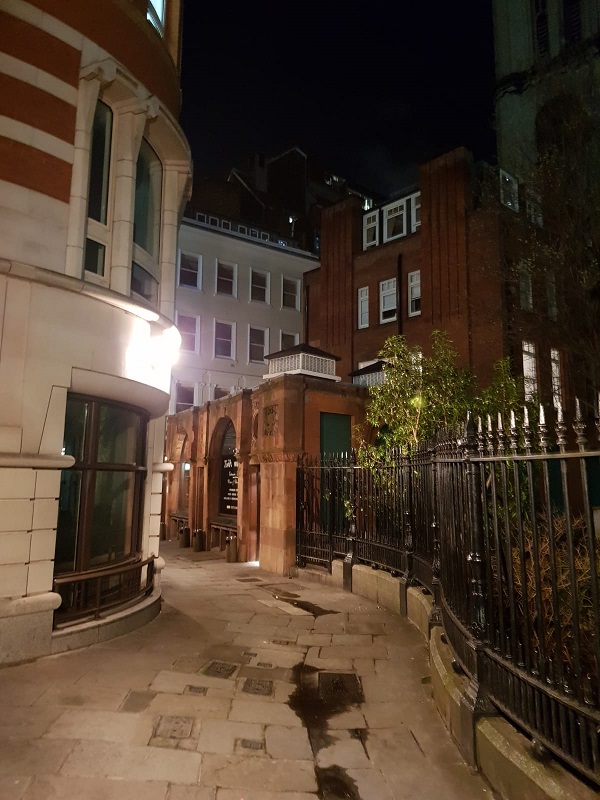
Cover picture: Former Jacob’s Island (Photograph: Philipp Röttgers)